A quick note before we get into it. I’m not a writer by trade. I’m a creative designer and someone who has spent years working in, thinking about, and building a business around healthcare communications.
I have ideas rattling around constantly. Insights I’m keen to share with peers and clients. Opinions on where the industry is heading that I think might be worth hearing.
The problem is, most of those thoughts arrive at 6.30 in the morning, somewhere between my first and second Earl Grey, and if I wait until I have time to write them up properly, then rewrite them, then rewrite them again (a perfectionist trait that drives my colleagues up the wall), they never make it out into the world at all.
That’s where AI comes in.
Not to think for me, or to replace my perspective, but to help me structure what’s already in my head, find the evidence that backs it up, and turn a half-baked idea into something people might enjoy reading and even learn from.
This article is a good example. The thoughts are mine. The research is real. The process was about ten times faster than it would have been otherwise.
Which, as it happens, is exactly the point I’m trying to make.
Everyone’s talking about AI
And honestly, so are we – constantly, enthusiastically, sometimes over each other. Every webinar I watch, the same question is asked to those working in the creative industry – “Do you see AI as a future threat or an opportunity”?
I’ve got to be honest, the answer for me is both! AI genuinely excites me and I think I can say the same for my team (although that’s not always been the case, with some thinking we’re all doomed!). The tools available to creative teams right now are extraordinary, and they’re moving fast.
For an agency like ours, that’s not a challenge to manage. It’s a welcome invitation to do better work, think bigger, and deliver more for our clients than we ever could before.
We’ve been testing generative AI tools across our work for quite some time now. Not just to keep up with the conversation, but properly, with good intention and structure, and with a real commitment to growing our expertise as the technology grows.
Whilst the healthcare sector remains understandably cautious in its use, we remain completely transparent with our clients and have those important discussions from the outset regarding the use of AI if we deem it to be a beneficial tool for their project.
And even when we get the green light, we tread extremely carefully when handling our client’s data whilst still (mostly) enjoying the experience that creative AI tools bring!
ISO certified in AI use
To do this, we made the decision very early on to have a comprehensive in-house AI policy that governs exactly how and where we use it. We secured ISO 42001 certification, which means our approach to AI management has been externally verified against an internationally recognised standard.
We didn’t get this certification because someone told us we had to. We did it because our clients operate in one of the most scrutinised industries in the world, and they deserve to know exactly how we work.
ISO isn’t for the faint hearted though, it’s a commitment to constantly and consistently review, assess and revise working practices to ensure we maintain good AI management standards.
We’re not watching AI from the sidelines. We’re in it, learning from it, and getting better at it every day.
So, what do we use it for?
Research
Getting properly under the skin of a therapeutic area used to us take days. Now it takes hours. AI gives our team more room to think and develop the kind of creative strategy that only comes when you’re not buried in medical and scientific information.
Creative concepts and copy
We’re not scientists or medical writers; we leave that to the experts. But we do understand scientific and medical language, and that changes everything. We use AI to push marketing content and copy further, to explore more creative options, and pressure-test concepts against the clinical reality before we present them. The creative process is still ours. AI just means we arrive at the good ideas faster and with more of them on the table.
Visual ideation
Through the use of AI we now have the option of showing clients a creative direction or a visual concept, all before a single photograph is taken, an illustrator puts pen to paper, or an artworker opens Photoshop. However, combining these specialist human design skills with AI tools can work even better! In our experience, that changes early conversations entirely. Clients make better decisions earlier, we nail the brief from the outset, and in turn can prevent expensive late-stage pivots.
Global adaptation
For projects that span international markets AI can accelerate the adaptation of content across markets – while our team adds the local nuance that no AI tool quite manages on its own.
The more we use these tools, the more we understand what they’re capable of. That’s an ongoing learning curve, and we’re genuinely enjoying it.
What AI still can’t do – and why that matters
We’re more than excited about where AI is going. We’re also honest about where it is right now. And this is where the research comes in!
According to findings from McKinsey’s 2026 AI Trust Maturity Survey, there are still persistent gaps in strategy, governance, and risk management across organisations using AI. Deloitte found that only 22% of life-sciences leaders have successfully scaled it, with just 9% reporting significant returns. The gap between using AI and using it well is real and wide. That gap is where specialist human expertise still earns its place.
AI doesn’t know your audience the way we do. After years of working in this sector, sitting in on data rich scientific briefings, developing materials for patients navigating life changing diagnoses and treatment, building brands for medtech companies trying to win the trust of procurement teams – we understand what motivates people in healthcare at a level that simply can’t be put in an AI prompt. That’s the foundation that all our projects are built on.
AI fluency isn’t the same as insight. AI organises, summarises and even writes well. What it can’t do is tell you what to say, to whom, at which moment in the patient or HCP journey, and through which channel, in a way that drives a change in human behaviour. That’s creative strategy.
There is the major concern over hallucinated citations and inaccurate clinical claims that can arise with AI-generated content. In such a regulated environment, accuracy is everything and this poses a significant risk to clinical decision-making and patient safety.
Great communications require creative courage. AI generates what’s statistically probable. It draws from what already exists. The creative communications that genuinely move people – that change how an HCP thinks about a therapy, or how a patient understands their condition – require originality, judgment, and the willingness to back an unexpected idea. That’s not something you can automate.
When to work with a specialist healthcare creative agency
Not every project needs us and going it alone (or with AI alone) may replace certain services we offer in the future but that’s not without risk.
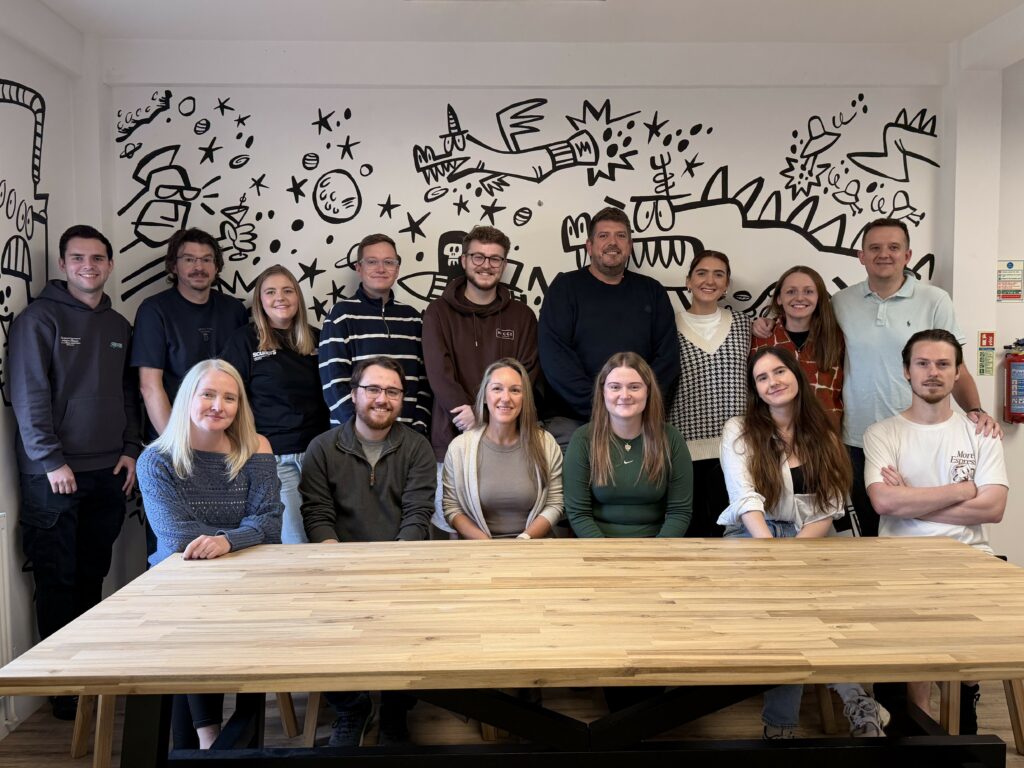
Where specialist healthcare creatives like the LOVELIVE team can make the difference is by developing communications with human connection, that show authenticity and have the power to create behavioural change. In understanding the sensitivities, accuracies and technicalities of such a regulated industry.
Knowing how to transform complex data into digestible information and visual guides that tell a relatable story. And experience in navigating an array of communications across the right channels, at the right time, to maximise engagement and action!
Growing with it, not just keeping up with it
According to my good friend Claude, agencies that will support their clients best over the next decade aren’t the ones who adopted AI earliest. They’re the ones who understand it most deeply, use it most thoughtfully, and build the governance around it that makes trust possible.
AI would of course say that, but it’s not going anywhere, so that’s exactly what we’re aiming for at LOVELIVE. Our commitment isn’t just to use AI because we can cut corners or see the opportunity to increase profit margins (although that would be nice in the current climate), it’s to become genuine experts in it, for our clients’ benefit as much as our own. It may in the future replace some of the manual design tasks we’ve loved doing for years, but with change always comes new opportunities. And that is why we’re all geared up for a new era of human-AI creative collaboration to bring new efficiencies to our business so we can focus our energies on what we do best, human-centred storytelling through design.
And if you want to see what that looks like in practice, we’d love to show you.
Drop us an email at hello@loveliveagency.com or give us a call on +44 (0) 1625 421880. Teams, Zoom, or good old-fashioned human face-to-face, we’re up for all of it.