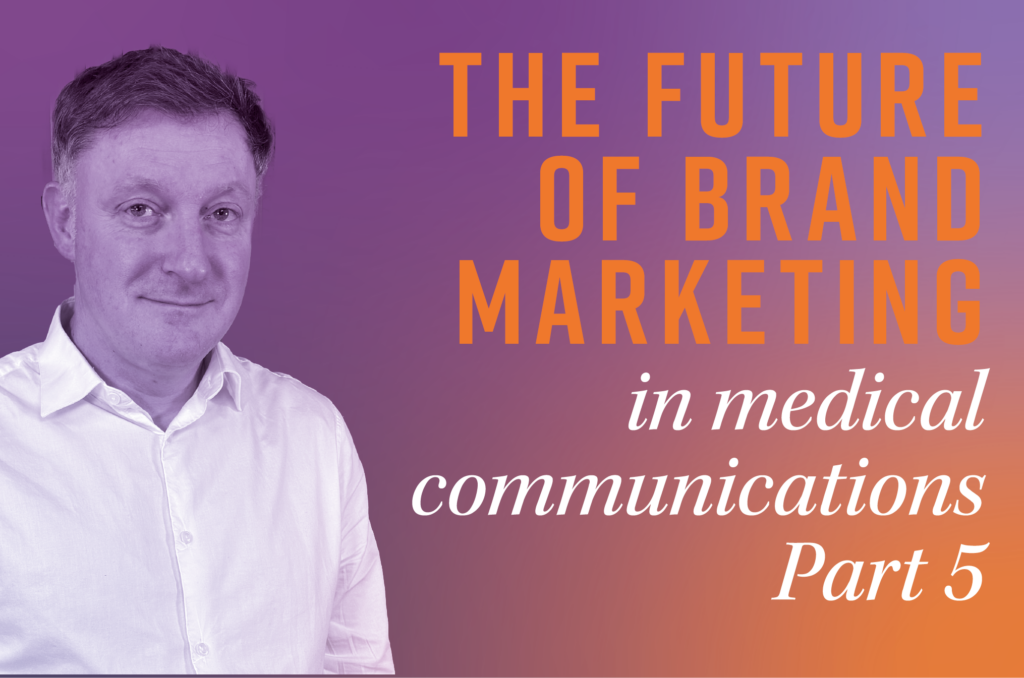
The pharmaceutical and medical device industries have, for too long, treated brand as secondary to science. Science no doubt earns a brand the right to exist in the market but brand determines how far it travels and how deeply it is trusted.
When a new medicine costs close to a billion dollars to develop, investing in clear and coherent brand communications isn’t a “nice to have”. It’s commercial common sense.
The science earns the licence to operate. The story is what makes people care.
So, what does the next decade actually look like for medical brands in the UK?
1. An ageing population means a bigger, more demanding audience
The UK population is getting older, and the health needs that come with it are outpacing what the NHS can comfortably manage.
The Health Foundation projects the number of people in England living with major illness will rise by 37% by 2040; that’s 2.5 million more people needing ongoing care and medication.
And we’re not talking rare conditions. Anxiety, chronic pain and diabetes – all managed in GP surgeries and community settings, where patients are well-informed and have strong opinions.
These are not audiences you reach with a campaign. They want to feel understood.
2. The NHS going digital opens new doors
The government’s 2025 10-Year Health Plan is one of the most significant shifts to NHS infrastructure in a generation. The headline ambition is to move from reactive treatment to proactive prevention, underpinned by a Single Patient Record; a secure digital account bringing together prescribing history, medical records, and even wearable data.
As more consultations move online and patients manage their health through apps, new opportunities will open up for brands to communicate in ways that are timely and genuinely useful.
The brands best placed to capitalise are those building these capabilities now, not when the shift is already complete.
3. AI is changing the creative brief
AI has moved quickly from experiment to standard practice across pharmaceutical marketing. More than 75% of biopharma executives in a recent Deloitte survey cited AI-enabled platforms as a major growth driver.
But, trust remains the most valuable asset a medical brand has, and campaigns that feel cold or manufactured can undo years of relationship building. We see this first-hand in our own work.
The brands winning with AI are using it to tell human stories faster and at greater scale. The creative brief matters more in an AI world, not less.
4. Showing real-world results is becoming the new standard
Clinical trial data will always be the foundation. But commissioners and clinicians want to see how a treatment performs in actual NHS practice, for example in older patients, in communities that weren’t well-represented in the original trials.
A brand that can show it is reducing hospital admissions or helping patients manage their condition day-to-day has a far more compelling story. That’s the future of value-based brand marketing in the UK, and it’s an area where strong, clear communication design makes a real difference.
5. Financial pressure makes brand clarity a genuine business asset
The commercial environment for medical brands in the UK isn’t getting easier. In that context, a coherent brand isn’t just a nice thing to have, it’s a financial asset.
Brands with clear narratives are easier for commissioners to understand, easier for clinicians to recommend, and easier for patients to ask for by name.
That kind of clarity compounds over time. Fragmented, campaign-by-campaign communications never do.
These five factors aren’t operating independently. They interact and build on each other. An ageing population generates rich health data. A digitally enabled NHS creates new engagement platforms. AI helps make sense of it all.
But what ties it together is simpler than any of that. A genuine commitment to the person on the other side of the message.
The patient who has lived with a chronic condition for years doesn’t want a campaign. They want to feel understood. The GP with a packed surgery doesn’t have time for promotional content dressed up as clinical insight. They want honest, useful information that respects how they actually work.
The brands that build lasting equity over the next decade will be the ones that use data to sharpen their understanding, technology to extend their reach, and creativity to make their story worth hearing.
Key takeaway
In medical communications, this means the patient, not the product, should be the hero of every story. The treatment is the enabling mechanism. That single re-frame changes everything: how you write, how you design, and how you measure success.
How LOVELIVE can help
Since 2010, we’ve worked with healthcare innovators who need to communicate complex ideas to demanding audiences. We get the regulatory constraints, we understand the multiple stakeholders, and we know how to translate technical innovation into compelling stories.
What we do:
- Brand identity and visual systems
- Creative strategy and messaging frameworks
- Data visualisation and diagrammatic storytelling
- Website UX/UI and service-explainer content
- Pitch decks, proposals and investor-facing materials
- Illustration, animation and motion graphics
- Report and insight publication design.
Want to see our healthcare credentials? Fill in the form below and we will get in touch
References:
https://www.health.org.uk/reports-and-analysis/reports/health-in-2040-projected-patterns-of-illness-in-england
10-Year Health Plan and Life Sciences Sector Plan
https://www.nhsconfed.org/publications/life-sciences-sector-plan
2026 Deloitte Life Sciences Outlook
2026 Predictions for Healthcare and Pharmaceutical Marketing: What You Need to Know Now – Spectrum S…
UK set to demand a third of pharmaceutical company revenue in second half of 2025
Top pharma categories advertised in the UK 2020| Statista
Estimated Research and Development Investment Needed to Bring a New Medicine to Market, 2009-2018
Pharma & Health Marketing Trends – Space & Time
The 2025 way forward: What can UK healthcare advertising expect?